The Beekeeper’s Toolbox – Essential Tools Every Apiculturist Must Own

Introduction

In the world of beekeeping, having the right tools is as crucial as understanding the bees themselves. Whether you’re a beginner or an experienced beekeeper, your success heavily depends on the quality and completeness of your beekeeper’s toolbox. In this post, we’ll explore the must-have beekeeping tools, their functions, and why each is vital for hive management.

Essential Tools for Every Beekeeper

1. Bee Suit and Gloves

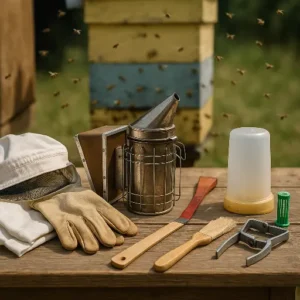
Protective gear is your first line of defense. A full-body bee suit, veil, and leather gloves protect you from stings and let you work confidently.

2. Hive Tool

A flat, sturdy piece of metal used to pry apart hive components, scrape wax or propolis, and lift frames. It’s like a beekeeper’s Swiss Army knife.
3. Smoker

Used to calm bees by masking alarm pheromones. A smoker is essential when opening the hive, conducting inspections, or harvesting honey.

4. Bee Brush

Soft-bristled brush used to gently remove bees from frames without harming them. Especially useful during inspections or honey extraction.

5. Frame Grip

Helps in lifting frames from deep hive boxes, especially useful when they are sticky or full of honey.

6. Uncapping Knife or Fork

When it’s time to extract honey, you need a way to uncap sealed honeycombs. Heated knives or forks are standard tools for this job.

7. Queen Catcher & Marker

To identify and track the queen, a queen catcher and marker pen make it easier to locate her during inspections.

8. Feeder

A feeder allows you to supplement your bees’ diet with sugar syrup during times when nectar is scarce.

Bonus Tips for Beekeepers

  • Keep your tools clean and dry to avoid spreading disease among hives.
  • Invest in quality items instead of cheap plastic tools — they last longer and perform better.
  • Always inspect your kit before heading to the apiary to ensure nothing important is missing.

Internal Link Suggestion

Explore premium beekeeping equipment on our store:
👉 Visit BeekeepingIndia Shop

Conclusion

The journey of “The Beekeeper” begins with preparation. With these tools by your side, you’re ready to manage your hives efficiently, ensuring health and productivity for your bees. Stay tuned for tomorrow’s post in our daily series!

Related Post

  • The Beekeeper’s Guide: Getting Started with Your First Hive

    Introduction Welcome to The Beekeeper blog series! In this first post, we’ll help beginners set up their very first hive—covering essential tools, safety tips, and a weekly routine to keep your bees happy and productive.   1. Choosing the Right HiveStart with a common Langstroth hi ve, favored by beekeepers worldwide for its modular design and harvest ease.WikipediaShutterstock+8Better Homes & Gardens+8Treehugger+8 2. Essential Gear for the New Beekeeper 3. Acquiring Your Bees Order about 10,000 bees with a healthy queen—typically packaged in a screened box. Plan before spring to ensure good apiary establishment. 4. Installing Your First Colony 5. Initial Feeding & Maintenance Provide sugar-water feed (2:1 ratio) until natural nectar is sufficient. Continue weekly checks for healthy brood patterns, pests, and moisture control. 6….

  • |

    Beekeeping India – Empowering the Nation’s Beekeepers

    Beekeeping India – Empowering the Nation’s Beekeepers Beekeeping India – Empowering the Nation’s Beekeepers Beekeeping India is India’s premier hub dedicated to supporting beekeepers in their journey to produce, sell, and procure high-quality honey from across the country. Built with a mission to strengthen sustainable beekeeping practices, our platform connects producers and buyers—from hobbyists to commercial apiarists—through an intuitive, reliable, and community-driven web experience. Why Join Beekeeping India? Nationwide ReachOur platform connects honey producers and buyers from every corner of India—urban, rural, and forest zones—helping beekeepers find the best market for their product. Education & TrainingAccess both online and hands-on practical beekeeping training modules covering bee biology, hive management, health inspection, honey extraction, packaging, marketing, and more (beekeepingindia.in). Expert Solutions & InsightsA dedicated “Bee Keeper…

  • |

    Inspection of closed hives

    Before you open the hive look at the entrances. Much can be learnt about the internal state of a hive by observing them at the entrance and given bellow points gives you an idea of what you are looking for. 1) Robbing– Bees fighting at the entrance gate. 2) Poison- Find piles of dead bees at the entrance gate. 3) Virus Disease- Dead Bees still moving. 4) Period of the dearth or Lack of storage- Dead drones at the entrance or drones get removed by the workers. 5) Chalk brood disease- Mummified larvae littering entrance gate. 6) Possible Starvation- Dead larvae being thrown out but not carried away. 7) Healthy colony- Pollen being carried in to the hive by worker. 8) Orientation flight- Many bee’s…

  • World top 20 honey production countries

    Hi welcome to my website in this article I want to give you the details of the top 20 honey production countries. Honey is the best food in the world to use for eating and medicinal purpose. In the world 136 countries are producing honey. In the whole world many species are known to harvest honey to consume. China is the most honey producer in the world. China produces 447.005 tons of honey in the year of 2021. This is a one of the largest amounts of honey producer in world. Apis Mellifera is the best-known species in the world to get honey of best quality. Some other species of honeybees are, Apis dorsata, Apis cerana, The German bee’s and more then we know about….

  • Online Beekeeping Training in India – Learn Beekeeping from Experts (March 23, 2025)

    Join Our Exclusive Online Beekeeping Training on March 23, 2025 Are you passionate about beekeeping or looking to start your journey as a beekeeper? Join our Online Beekeeping Training on March 23, 2025, and learn everything you need to know to get started! Training Details: 🌼 Date: Sunday, 23rd March 2025 🌼 Time: 9:30 AM to 4:30 PM (IST) 🌼 Mode: Online (Google Meet) 🌼 Training Fee: ₹499 This training is designed for beginners and experienced beekeepers who want to deepen their knowledge and improve their beekeeping skills. 🐝 What You Will Learn: 🐝 Fundamentals of beekeeping 🐝 How to set up and manage a beehive 🐝 Understanding bee behavior and colony management 🐝 Harvesting honey and maintaining hive health 🐝 Common challenges and how to overcome…

  • The Beekeeper’s Calendar – Monthly Tasks for Healthy Hives

    The Beekeeper’s Calendar – Monthly Tasks for Healthy Hives Introduction Beekeeping is not a once-in-a-while task—it’s a year-round commitment. Every season brings different responsibilities and challenges for a beekeeper. Whether it’s preparing for spring buildup or managing winter survival, having a proper monthly plan ensures healthy colonies and maximum honey production. Here’s your complete Beekeeper’s Calendar for the year. 🗓️ January – Monitor and Wait 🗓️ February – Prepare for Spring 🗓️ March – Build-Up Begins 🗓️ April – Swarm Prevention 🗓️ May – Full Bloom 🗓️ June – Peak Activity 🗓️ July – Honey Harvest 🗓️ August – Begin Winter Prep 🗓️ September – Final Harvest 🗓️ October – Wintering Begins 🗓️ November – Rest & Reflect 🗓️ December – Quiet Time Want tools…