
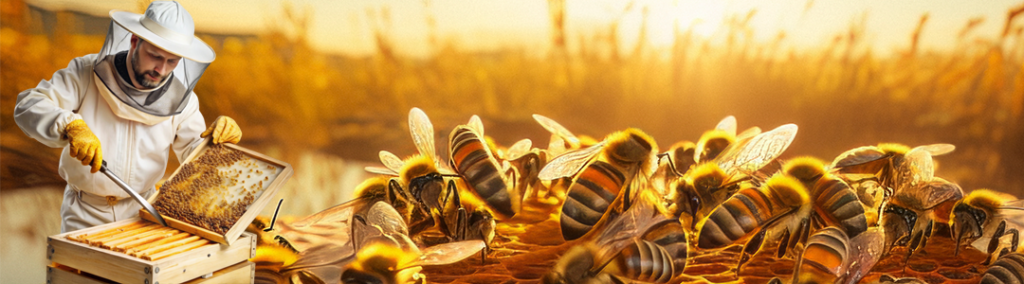
Beekeeping India – Empowering the Nation’s Beekeepers
Beekeeping India is India’s premier hub dedicated to supporting beekeepers in their journey to produce, sell, and procure high-quality honey from across the country. Built with a mission to strengthen sustainable beekeeping practices, our platform connects producers and buyers—from hobbyists to commercial apiarists—through an intuitive, reliable, and community-driven web experience.
Why Join Beekeeping India?
Nationwide Reach
Our platform connects honey producers and buyers from every corner of India—urban, rural, and forest zones—helping beekeepers find the best market for their product.Education & Training
Access both online and hands-on practical beekeeping training modules covering bee biology, hive management, health inspection, honey extraction, packaging, marketing, and more (beekeepingindia.in).Expert Solutions & Insights
A dedicated “Bee Keeper Area” provides solutions, problem reports, FAQs, and knowledge-sharing on bee health, queen management, apiary setup, disease control, and feeding strategies (beekeepingindia.in).Marketplace for Accessories
A shop section offers hive frameworks, protective gear, nutritional supplements, and more—essential for setting up and maintaining modern apiaries .Community & Problem Reporting
Beekeepers can report issues, exchange peer advice, and explore curated solutions—from swarm management to medicinal feed—via our interactive discussion forums (beekeepingindia.in).
Join a Movement for Sustainable Honey Production
Bridging Markets: Streamline direct sales, expand into bulk transactions, or target specialty honey brokers.
Capacity Building: Ongoing training ensures beekeepers stay ahead of scientific advances and market trends.
Empowered Communities: By uniting across regions, beekeepers form resilient networks that thrive on mutual learning.
Natural, Ethical Honey: Meet growing consumer demand for unprocessed, pure, jungle-sourced honey through verifiable apiary origins.
Perfect for…
New and aspiring beekeepers eager to learn
Experienced producers scaling up
Buyers seeking authentic, traceable Indian honey
NGOs, cooperatives, and rural livelihoods programs
🔗 Quick Links
Home – Welcome to the hub of Indian beekeeping.
About Us – Learn our vision and mission. (beekeepingindia.in)
Blog – Insights, industry updates, honey recipes, and conservation stories.
Shop – Browse beekeeping gear, nutritional supplements, and hive equipment. (beekeepingindia.in)
Bee Keepers Area – Specialized content for practitioners:
Trainings (Online & Practical) (beekeepingindia.in)
Report a Problem (beekeepingindia.in)
Solutions
FAQ
Beekeeping Systems – Overview of systems like honey hunting, bee-box beekeeping, etc. (beekeepingindia.in)
Contact Us – Reach us at 3060/12 Didar Nagar, Kurukshetra (Haryana), or via email: bkeepingindia@gmail.com (beekeepingindia.in)
Vanamadhu (Jungle Honey) – Discover and buy pure forest-harvested honey via our sub-brand Vanamadhu. (vanamadhu.beekeepingindia.in)
YouTube Channel – Tutorials, pollination services, beekeeper reviews, and more. Bee Keeping India
The graphics are stunning and the gameplay is very engaging. I found some really unique titles here that I haven’t seen anywhere else. Check it out at ad7777game
Finally found a safe place to get the game. The download was fast and the installation was a breeze. Thanks to batpkrgamedownload.
Super impressed with the customer support team, they answered my questions in minutes. The gameplay is fair and rewarding. okadaplaycasino is legit!