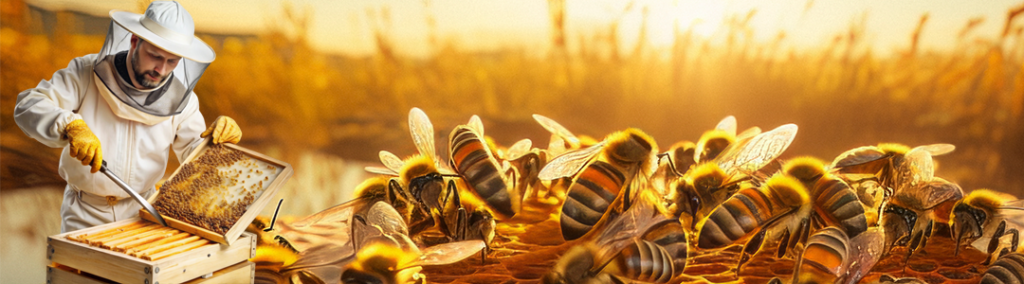
The Beekeeping is an ancient art that has fascinated
its devotees since earliest times. Honey robbed
from wild colonies in trees & caves was early people’s main source of sweet food. Dominance of
honey  the major sweetener continued until cane
and beet sugar became generally available in
comparatively recent times. Honey with its unique
flavors and aromas and natural origin still has
wide appeal. World production was estimated at
1,446 million pounds in 1976 and more than
1,415 million pounds in 1977.
In the United States about 200,000 people keep
almost 5 million colonies and produce 200 million
to 250 million pounds of honey annually. Beekeepers can be classified as full-time, sideline, or
hobbyist, with the number of colonies operated
by individual owners varying from one to 30,000.
Beekeepers derive income from the sale of honey,
renting of colonies for crop pollination, production
and sale of queen bees and packaged bees, and
to a minor extent, from the sale of beeswax, pollen,
bee venom, propolis, and royal jelly.
Problems and dangers confront the long-time
survival of beekeeping as a profitable agricultural
enterprise, and changing agricultural and land-use
practices threaten the survival of adequate
numbers of bees required to pollinate some 90
crops or more. As human population increases,
houses, factories, and highways replace open
fields of honey and pollen plants.
Clean cultivation of farmland and large-scale
monoculture reduce the sequence of wild plants
needed to provide bee food throughout the season.

Pesticides not only kill many bees, but bees also
cannot be kept in areas where pesticides are used
on a regular basis—such as near fruit orchards and
many cottonfields. The presence of nectar and pollen plants in adequate numbers throughout the
season is essential to prosperous beekeeping. In
the national interest, beekeeping must survive. If
it is to do so, it will need greater consideration than
it now receives in land-use planning, in the revegetating of disturbed land, in large-scale weed and
pest control programs, and in providing beekeeping
sanctuaries on State and Federal lands.
Crop pollination is more essential to agricultural
production than is generally realized. To maintain
an adequate pollinating force of bees in all parts of
the country, beekeeping must remain a viable,
prosperous industry. Beekeeping will survive in
strength adequate to our needs only if we can reverse the trend of recent years toward a deteriorating environment for bees.
The purpose of this handbook is to provide readers with a better understanding of beekeeping in
the United States. Itis not a beginner’s book in the
how-to-do-it sense, but it does provide the beginner
as well as the experienced beekeeper with a good
insight into the status of this small but essential
industry.
Dr. E. F. Phillips, one of the early leaders of
research in the U.S. Department of Agriculture,
said that more had been written about bees than
any living thing other than human beings. Books,
bulletins, and bee journals still provide evidence
that our fascination with bees and beekeeping continues unabated. Beekeepers of this generation
must try to make sure that we bequeath an environment in which bees may profitably be kept
by future generations.

Related Post

  • |

    वैज्ञानिक मधुमक्खी पालन

    वैज्ञानिक मधुमक्खी पालन मधुमक्खियों के प्रबंधन और देखभाल की एक ऐसी विधि है जो आधुनिक विज्ञान, अनुसंधान और प्रौद्योगिकी पर आधारित है। इसका उद्देश्य प्राकृतिक संसाधनों का सही उपयोग करके मधुमक्खियों की उत्पादकता को बढ़ाना और उनके स्वास्थ्य को बेहतर बनाना है। इसमें पारंपरिक मधुमक्खी पालन से अलग आधुनिक तकनीकों का उपयोग किया जाता है, जैसे: • मधुमक्खी के प्रकार का चयन: स्थानीय और उन्नत प्रजातियों का चुनाव ताकि बेहतर शहद उत्पादन और रोग प्रतिरोधक क्षमता सुनिश्चित हो। • हाइव मैनेजमेंट: आधुनिक लकड़ी के बॉक्स (Langstroth हाइव) का उपयोग किया जाता है, जो मधुमक्खियों को बेहतर सुरक्षा और आराम देता है। • रोग और कीट प्रबंधन: वैज्ञानिक तरीके से मधुमक्खियों में होने वाले रोगों (जैसे वरुआ माइट) और कीटों का प्रबंधन। • फूलों और पौधों…

  • Benefits of Mushroom Cultivation

     मशरूम का उपयोग प्राचीन काल से भोजन के रूप में किया जा रहा है। इन्हें बहुत ही कोमल माना जाता है। पोषण के दृष्टिकोण से मशरूम को मांस और सब्जियों के बीच रखा जाता है। इनमें प्रोटीन, कार्बोहाइड्रेट और विटामिन्स भरपूर मात्रा में होते हैं। मशरूम कैलोरी में कम हैं और इसलिए दिल और मधुमेह रोगियों के लिए सर्वोत्तम हैं। मशरुम अनाज, फल और सब्जियों की तुलना में बेहतर हैं इनमें ताजा वजन के आधार पर प्रोटीन (3.7%) के अलावा कार्बोहाइड्रेट (2.4%), वसा (0.4%), खनिज (0.6%) और पानी (91%) है । मशरूम में मानव विकास के लिए सभी आवश्यक नौ अमीनो एसिड होते हैं। मशरुम थायमिन (विटामिन-बी 1), राइबोफ्लेविन (बी 2), नियासिन, पैंटोथेनिक एसिड, बायोटिन, फोलिक एसिड का स्रोत है, विटामिन सी, डी, ए और…

  • |

    Latest Honey Rates in India: A Must-Read for Beekeepers Looking to Sell

    Latest Honey Rates in India: A Must-Read for Beekeepers Looking to Sell Are you a beekeeper in India wondering about the current market rates of honey? You’re not alone. With the rising interest in natural products and organic honey, many beekeepers are looking for reliable platforms to not only check honey prices but also sell their honey directly to buyers. At Beekeeping India, we’ve created the perfect solution for you. Why Knowing Honey Prices Matters for Beekeepers Whether you’re just starting out or are a seasoned beekeeper, knowing the right selling price of honey is crucial. It helps you: But the challenge has always been — where do you find real-time or regularly updated honey rates in India? Introducing Our Honey Marketplace To bridge this…

  • Bee Keeping in City

    Bee Keeping Urban Area If you want start bee keeping in city or Urban Area it’s good idea but you need to know something before taking decision. In urban area many peoples afraid to see the bees because they can stung them. It’s true but it’s not much harmful for them. You need to say them it’s benefits of bees and stinging then they don’t afraid. In the field while they going out side the hive to collect nectar and water they are not much defensive. Selection of Right Location First of all you need to select proper place where bees are invisible to other people. “Out of sight out of mind” is a famous quote if people don’t see the bee colonies they never…

  • Bee Keeping in Urban Area

    Some may surprised to know why on earth beekeeper would keep bees in a city area. In fact some of best honey comes from city parks and garden and some areas richer in nectar than many areas of the crops countryside. There are main things to think about beekeeping in urban area is neighbours, neighbours and neighbours. If you want bees your neighbours don’t. The neighbours will be scared of bees because many peoples think that honey is produced by nice, bumble bees & so when they see your fast horrid little wasp like things around all over the place, they will not always be pleased or happy about it keep them happy by trying to adhere to the hive placements outlined below and always…

  • Online Training for Beginners

    Welcome dear visitors of our website and youtube channel we are going to organize a Training Program on Bee Keeping. This program will be organize for beginners start up guide. Training must be required for all persons to start bee keeping for less loss of money and time.   Why Training is Important In the beginning one who want to start bee keeping has less understanding about the basic concepts of bee keeping. They don’t know about the needs and requirements of the bee’s. Its very important to know about the inner mechanism of the bee’s. How bee’s can grow faster and what are the off season managements. How to find better place to migrate bee’s. How to harvest honey etc. Online vs Offline Training Actually the…

Leave a Reply