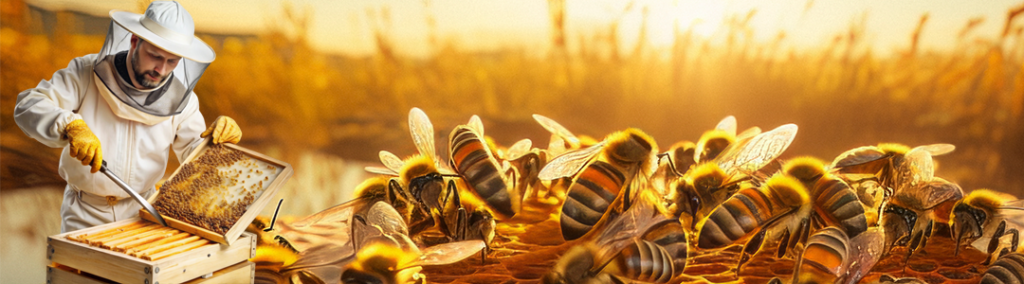
वाणिज्यिक मधुमक्खी पालन का आर्थिक मूल्य

संयुक्त राज्य अमेरिका में कृषि एक प्रमुख उद्योग है जिसका हर बारह नौकरियों में से एक से सीधा संबंध है। बीसवीं सदी की शुरुआत से, ‘प्रवासी’ मधुमक्खी पालकों ने यू.एस. फसलों की एक विस्तृत विविधता को परागित करने के लिए मौसमी रूप से अपने छत्तों को स्थानांतरित करके कृषि। वाणिज्यिक मधुमक्खी पालन प्रत्येक वर्ष कृषि के लिए $15 और $20 बिलियन का आर्थिक मूल्य जोड़ता है। उपज के बिना वाणिज्यिक परागण सेवाओं से संभव हुई वृद्धि, खाद्य कीमतों में वृद्धि होगी, हमारे कृषि क्षेत्र विश्व स्तर पर तेजी से कम प्रतिस्पर्धी बनते हैं, और हमारी खाद्य आपूर्ति की सुरक्षा और विविधता होगी कम करना। जंगली कीट परागणकों की आबादी पहले से ही गंभीर गिरावट में है ।

मधुमक्खी पालन हमारी कृषि अर्थव्यवस्था का पहले से कहीं अधिक महत्वपूर्ण हिस्सा है। इस उद्योग के लिए पतन का सामना करना पड़ रहा है। महान मंदी के साथ बहुत कम होने के कारण-उनकी मधुमक्खियां मर रही हैं।

मीडिया ने इन मधुमक्खी मौतों के पीछे “रहस्य” पर ध्यान केंद्रित किया है, और बड़े पैमाने पर आर्थिक कहानी की अनदेखी की है। हम एक असाधारण रूप से लचीला और उत्पादक समुदाय की तेजी से गिरावट देख रहे हैं, जो मुख्य रूप से पारिवारिक व्यवसायों द्वारा चलाए जा रहे हैं, जिनके सदस्य देश में अपूरणीय सेवाएं प्रदान करने के लिए यात्रा करते हैं।

आर्थिक मूल्य

मधुमक्खियां दुनिया भर में सबसे अधिक आर्थिक रूप से मूल्यवान परागणकर्ता हैं, और बादाम और ब्रोकोली जैसी कई उच्च मूल्य वाली फसलें पूरी तरह से वाणिज्यिक मधुमक्खी पालकों द्वारा परागण सेवाओं पर निर्भर हैं। विश्व स्तर पर, मानव उपभोग के लिए कृषि उत्पादन के कुल आर्थिक मूल्य का 9.5% कीट परागण से आता है – 2005 में, यह राशि केवल 200 बिलियन डॉलर से कम थी।

अकेले यू.एस. में मधुमक्खियों द्वारा परागित फसलों का मूल्य 2000 में $ 14.6 बिलियन का अनुमान लगाया गया था – वह तब से आंकड़ा बढ़ गया है।

कृषि में मधुमक्खियों की भूमिका

हम जो भोजन करते हैं उसके तीन काटने में से एक परागण के लिए मधुमक्खियों पर निर्भर होता है। विश्व के 90 प्रतिशत भोजन प्रदान करने वाली 100 फसलों में से 70 से अधिक मधुमक्खियों द्वारा परागित की जाती हैं।

  • उत्तरी अमेरिका में, मधुमक्खियां बादाम, एवोकाडो, क्रैनबेरी और सेब जैसे लगभग 95 प्रकार के फलों को परागित करती हैं।
  • अगली सबसे महत्वपूर्ण फसल (सेब) के परागण के लिए उपयोग की जाने वाली मधुमक्खियों की तुलना में बादाम के परागण के लिए मधुमक्खियों की कई कॉलोनियों को तीन गुना से अधिक किराए पर लिया जाता है।
  • कलिफोर्निया दुनिया के बादाम के आधे से अधिक उत्पादन के लिए जिम्मेदार है। o बादाम परागण रेंज के लिए किराए पर दी गई मधुमक्खी कॉलोनियों की संख्या का अनुमान 1.3 मिलियन से 1.5 मिलियन के बीच।
  • सेब की फसल के लिए किराए की कॉलोनियों की संख्या 275,000 से अधिक होने का अनुमान है।

इस लिहाज से देखा जाए तो भारत में भी इसकी बहुत बड़ी संभावनाएं हैं।

Ram Juari Bee

Related Post

  • Strange fact About Bee’s

    Honey-bees can navigate using the position of the sun, polarized light and landmarks. They can ‘tell’ other bees about the distance and bearing to sources of food using a well developed symbolic language based on movement and sound. They can also regulate the temperature of the nest to an exact degree using heating and cooling systems of immense complexity. As long as it has water and food, a colony placed on the sides of a volcano or iceberg will maintain its brood nest at 34º C (93º F). It is these facets of the honey-bee’s ability that have caused it to be one of the most researched insects on earth, and all countries maintain at least one institute devoted to bee research, and many universities…

  • Export of Artificial Pollen from India

    Hi friends, We are a producers of good quality of Artificial Pollen from India. We export the pollen for feeding bees in the world. This facility is for the support of the Bee Keepers in the world to help them to feed bees in the dearth period. Bees are very needy during the dearth period to consume pollen to grow the generation. Bee’s collect the natural pollen from the flowers to feed the larva and baby bee’s in the colony. In the dearth period bee’s unable to find the pollen from the flower’s because of flowers don’t exist in the nature always. The result is slowing the growth of the bee’s. The queen stop egging because of the low food resource outside for the foragers….

  • Winter Management of Bee’s

    Winter season is very tough season for the bee’s to survive. In the winter season bee’s are unable to go outside to collect food due to low temperature. In this situation bee keepers need to take care or their bee colony to survive them. Winter Management for Bee’s image-1 The main reason of bee’s not going outside is low temperature & not availability of sufficient flower’s to collect nectar & pollen outside their hive. Some technic to help them is available for bee keeper’s to help them. These technics are called as Winter Management Technic are given bellow Close the top cover with air proof not to entering the snow & cold air in to the hive. If your cover is loose and space between…

  • Summer Management’s for bees

    Hi friends When we working with bees then one of the big problem is draught season. In the summer bees want many things to help them with your caretaking behavior. The hot summer season is very hard for the bees they want feeding water frequently. These are the main things you require to do in the summer Placed your bees under a tree or in a sheddow area. The water source is not away more then 500 mtrs Make sure your bee boxes well ventilated. Top cover can be slightly loose in the summer. Avoid direct heat of sunlight to saved hives melted. Don’t visit the colony boxes in the hot time. You can feed your bees inside the box by sugar syrup or water….

  • Bee’s & Flower’s

    There are many types of flower’s in the nature for bee’s. Bee Keeper’s don’t know much about which types of flower’s were used by the bee’s to collect nectar & pollen. We only know little about the flower’s name & variety. In the forest bee’s goes for their food and visiting more then 2,000 flower’s a day in search of nectar & pollen. If we identify some flower’s to useful for them it will be very helpful for bee keeper’s. Bee keeper’s  migrate the bee’s from one place to another place to survival of bee’s and to collect bee products. Recognition of the site and requirements of the bee’s are useful for bee keeper’s. In the video given bellow you can understand about how to…

  • Social Behaviour of Honey Bee’s

    Among different insect orders, only 8 have been recognized by insect taxonomists which have some communal life. Out of these 8 orders only two orders viz. Isoptera and Hymenoptera have well developed social organization. Even in Hymenoptera, only two families namely Halictidae and Apidae of superfamily Apoidea contain fully social species. Most of other bees live solitary life. Social behaviour Honey bees are among the fully social insects having overlap of many generations in the same nest. The colony is a well organized social group having division of labour in terms of laying of eggs, nursing, comb building, guarding, food collection and its storage. They have well developed communication system through different types of dances as well as trophallaxis. Biological communication can be defined as…

One Comment

Leave a Reply

Your email address will not be published. Required fields are marked *